Source Diabetes Blood Glucose Test Strips for Home, Clinic, and Lab
Find 30 diabetes blood glucose test strips from verified manufacturers. Compare models like G01 and MS-GL200, check CE and FDA certifications, and review pricing for home, clinic, and lab use; compare the available evidence and request quotations based on your requirements.
Key considerations
Products List




Comprehensive Sourcing Guide
Diabetes Blood Glucose Test Strips Sourcing Guide
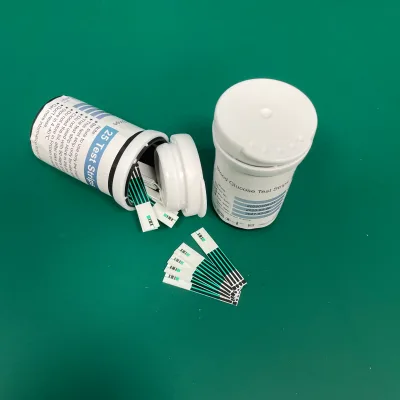
Procurement professionals must first distinguish between the meter hardware and the consumable test strips, as the supply chain dynamics differ significantly for each component. The observed market data indicates a diverse product range where some listings explicitly categorize items as "Blood Glucose Test Strip" while others list "Test Strips & Test Tube" or even "Food Rapid Test Kit," creating potential confusion in specification matching. Buyers should verify that the specific SKU they intend to purchase aligns strictly with the intended diagnostic application, ensuring the product is not a generic food test kit mislabeled for medical use.
The observed product attributes reveal a split in customization options, with some suppliers offering "Customized" solutions while others list "Non-Customized" items, directly impacting branding and packaging requirements. This variation necessitates a clear definition of whether the buyer requires private labeling, specific logo printing, or standard packaging like the "Carton" or "50 PCS/ Box" configurations noted in the data. Understanding these distinctions early prevents procurement delays caused by mismatched expectations regarding the level of customization available from the manufacturer.
Product Scope and Observed Listing Signals
Buyers should analyze the observed listing signals to identify the specific form factor and usage mode required for their distribution channels. The data shows products designated for "External Use" with a target group of "Middle-aged and Old" or "Adult," which helps in segmenting the market for specific demographic needs. Additionally, the presence of models like "blood glucose meter wrist" suggests a niche segment of wearable devices, whereas standard strips are typically paired with handheld meters, requiring careful verification of compatibility before bulk ordering.
The packaging and unit standard data provide critical insights into inventory management and logistics planning for large-scale orders. Listings indicate varying standards such as "50 units" per box or "108 pcs/ctn," alongside specific packing methods like "25PCS/Vial, 2 Vials/Box" or "1PC/Pouch, 50pouches/Box." These variations directly influence storage requirements and shipping costs, so buyers must confirm the exact unit count per master carton to accurately calculate freight charges and warehouse space allocation for their specific distribution network.
Technical Specifications to Verify
Technical verification must begin with the memory capacity and test time, as these metrics define the user experience and operational efficiency of the device or strip system. The observed specifications include a "Memory" capacity of "200 Sets" and a "Test Time" of "10s," which are key performance indicators for clinical accuracy and patient convenience. Buyers should ensure that any selected model meets these baseline performance standards, as deviations could indicate inferior sensor technology or outdated processing units that may compromise data reliability.
Power supply and material composition are equally critical technical factors that determine the longevity and safety of the equipment. The data highlights power requirements such as "One 3.0 V Cr2032 Lithium Battery" or a "3V/0.01W" supply, alongside materials like "Plastic" for the device casing. Procurement teams must verify that the power specifications match the intended usage environment and that the material composition meets durability expectations, ensuring the product can withstand regular handling without degradation of the internal components or the test strip integrity.
Compliance and Safety Documentation
Regulatory compliance is a non-negotiable aspect of sourcing medical devices, with the observed data listing certifications such as "GMP," "CE," "FDA," and "ISOCE." Buyers must rigorously validate that the specific supplier holds active and valid certificates for the exact product model being purchased, as the presence of a certification on a general listing does not guarantee coverage for every SKU or production batch. It is essential to request current certification documents to confirm that the product meets the regulatory standards of the destination market before finalizing any purchase agreement.
Sterilization methods and quality guarantees further define the safety profile of the medical consumables and devices in the supply chain. The listings show a mix of "Ethylene Oxide Sterilization" and "Without Ethylene Oxide Sterilization" options, alongside quality guarantee periods ranging from "One Year" to "Two Years." Procurement officers must explicitly confirm the sterilization status required for their specific application, as non-sterile items may be unsuitable for invasive procedures, and the warranty period should align with the expected product lifespan and risk tolerance of the organization.
Cost Drivers and Commercial Terms
The observed price range of 0.1 to 150 USD and MOQs spanning from 1 to 10000 units indicate a highly variable cost structure driven by product type and order volume. Buyers should anticipate that lower unit prices often correlate with higher minimum order quantities, particularly for consumables like test strips, whereas specialized meters may command higher prices with more flexible MOQs. Understanding this relationship is vital for budgeting, as the total cost of ownership includes not just the unit price but also the capital tied up in inventory due to high MOQ requirements.
Customization services and packaging specifications act as significant cost drivers that can alter the final commercial terms of the agreement. The availability of "Logo Printing" and "Customized" options typically incurs additional setup fees and may extend lead times, while standard "Carton" or "Carton Box" packaging is generally more cost-effective. Buyers must negotiate these variables carefully, balancing the need for brand differentiation against the budget constraints, and ensuring that any additional costs for customization are clearly defined in the contract to avoid unexpected expenses.
Supplier Qualification and Quality Control
Supplier qualification requires a thorough review of the production origin and manufacturing capabilities, with the data pointing to locations such as "China" and "Yangzhou, Jiangsu, China (Mainland)." Buyers should verify the specific factory location to assess logistical feasibility and potential trade barriers, while also confirming that the supplier has the capacity to maintain consistent quality across different production batches. The presence of multiple product models like "G01," "APS-BGT-002," and "MS-GL200" suggests a diverse manufacturing portfolio, necessitating a check on the supplier's focus and expertise in blood glucose testing specifically.
Quality control processes must be validated through the supplier's adherence to standards and their ability to provide consistent product specifications. The observed standards, such as "50 units" or "108 pcs/ctn," serve as benchmarks for packaging consistency, but buyers should also inquire about internal quality control measures beyond these basic standards. Ensuring that the supplier maintains strict control over the "Quality Guarantee Period" and sterilization processes is essential to mitigate the risk of receiving defective products that could lead to regulatory issues or patient safety concerns.
Long-Term Procurement Checks
Establishing a long-term procurement strategy involves monitoring the stability of product specifications and the reliability of the supply chain over time. Buyers should regularly audit the supplier's ability to maintain the "Test Time" of "10s" and the "Memory" capacity of "200 Sets" as these technical parameters are critical for maintaining user trust and clinical efficacy. Any deviation from these established specifications should trigger a review of the production process to ensure that the product continues to meet the original performance requirements without compromising quality.
Sustainability and regulatory updates are key factors that must be monitored to ensure the continued viability of the procurement relationship. As regulations evolve, suppliers must adapt their certifications, such as maintaining "CE" or "FDA" status, and update their sterilization methods if required by new safety standards. Buyers should establish a protocol for periodic reviews of the supplier's compliance status and product updates, ensuring that the supply chain remains resilient and that the products continue to meet the evolving needs of the healthcare market and regulatory bodies.
FAQs
What certifications are available for these blood glucose meters?
The devices typically hold CE and GMP certifications, with some models also featuring FDA and ISO approvals. These credentials ensure compliance with international medical device standards. Buyers should verify specific model documentation to confirm which regulatory marks apply to their intended market and usage requirements.
How long does the testing process take?
The test time is approximately 10 seconds per result. This rapid measurement capability allows for efficient monitoring of blood glucose levels. The automatic feature ensures consistent readings without manual timing, making it suitable for frequent daily checks by patients or healthcare providers in clinical settings.
Can the product be customized with a logo?
Yes, logo printing is available for many models. Buyers can request custom branding on the device or packaging. This customization option supports private labeling strategies for distributors and clinics. Please confirm specific customization capabilities and minimum order quantities with the supplier before placing bulk orders.
What is the memory capacity of the meter?
The device stores up to 200 sets of test results. This memory capacity allows users to track historical glucose levels over time. The data can be reviewed to monitor trends and manage diabetes effectively. It is designed for family use, supporting multiple users with stored records.
What power source does the device use?
The meter operates using one 3.0V CR2032 lithium battery. This standard battery type is widely available and easy to replace. The power supply requirement is low, ensuring long operational life between changes. Users should keep spare batteries on hand for uninterrupted monitoring capabilities.
What is the typical packaging format for orders?
Products are packed in cartons or boxes, with specific configurations like 50 pieces per box. Some items come in pouches for individual protection. The packaging is designed to maintain product integrity during shipping. Buyers should check the exact packing details for each model to plan storage and distribution effectively.